Crypto Ledger Transaction Signing: Security Workflow Analysis

Crypto Ledger Transaction Signing implements a secure workflow that ensures every cryptocurrency transaction receives explicit user approval through physical confirmation on the hardware device. The signing process occurs entirely within the secure element, producing cryptographic signatures that authorize transactions without ever exposing private keys to connected computers or smartphones. This architecture prevents unauthorized transactions even when companion software or connected devices become compromised by sophisticated malware.
Crypto Ledger Secure Transactions rely on the principle of independent verification, where the hardware wallet displays transaction details on its own screen separate from potentially manipulated software displays. Users verify recipient addresses, amounts, and network fees on the trusted hardware screen before providing physical confirmation through button presses or touchscreen interaction. Unlike software wallets where signing occurs on vulnerable general-purpose devices, or competitors like Trezor and KeepKey with different confirmation workflows, Ledger's secure element ensures signatures cannot be generated without genuine user intent. This page explains the technical details of transaction signing security.
How Transaction Signing Works in Crypto Ledger
Crypto Ledger transaction signing follows a structured workflow designed to prevent unauthorized approvals while maintaining usability for legitimate transactions. The process separates transaction construction from signing, with companion software handling network communication and interface while the hardware wallet handles cryptographic operations and user verification.
The signing workflow ensures that private keys never leave the secure element during any operation. The companion software constructs transaction data based on user input and sends this data to the connected hardware wallet. The device displays the transaction details for user verification, then generates a cryptographic signature inside the secure element if the user provides physical confirmation. Only the signature returns to the companion software for broadcast to blockchain networks.
Preventing Unauthorized Approvals
Crypto Ledger transaction security implements multiple barriers against unauthorized signing:
| Protection Layer | Implementation | Attack Prevented |
|---|---|---|
| Physical confirmation | Button press required | Automated signing |
| Independent display | Hardware screen verification | Screen manipulation |
| PIN protection | Device access control | Unauthorized device use |
| Transaction parsing | Clear detail presentation | Hidden transaction data |
| Amount verification | Explicit value display | Value manipulation |
| Address display | Full recipient showing | Address substitution |
These layers work together to ensure that transaction signing requires informed user consent. Even if malware completely controls the connected computer, it cannot sign transactions without physical button presses on the hardware wallet, and manipulation attempts become visible on the independent hardware display.
Verification Display and Confirmation
Crypto Ledger secure transactions require users to verify details on the hardware screen before confirmation:
- Recipient address displays character-by-character for verification
- Transaction amount shows in the asset being sent
- Network fees display separately from transaction value
- Contract interactions show destination contract addresses
- Token approvals display the approved contract and limits
- Staking operations show validator details and amounts
The verification step represents the critical security moment where users confirm that displayed details match their intentions. Attackers cannot modify what appears on the hardware screen regardless of their control over connected devices, making careful verification essential for transaction security.
Signing Workflow Technical Details
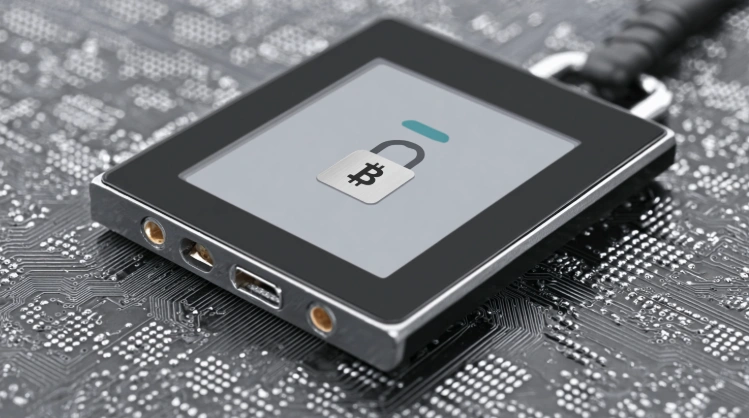
Crypto Ledger transaction signing employs elliptic curve cryptography to generate signatures proving transaction authorization without revealing private keys. The mathematical properties of these signatures allow blockchain networks to verify that the holder of specific private keys authorized the transaction, without the keys themselves being transmitted or exposed.
The signing workflow processes transaction data through multiple stages within the secure element. Transaction parsing extracts relevant details for display. User verification occurs through the independent screen. Confirmation triggers signature computation using the protected private key. The resulting signature and original transaction data combine for broadcast.
Cryptographic Signature Generation
Crypto Ledger transaction security signature generation process:
- Companion software constructs unsigned transaction with recipient, amount, and fees.
- Transaction data transmits to hardware wallet through USB-C or Bluetooth connection.
- Hardware wallet parses transaction and extracts details for display.
- Independent screen shows recipient address, amount, and fee information.
- User verifies displayed details match intended transaction parameters.
- Physical button press or touchscreen confirmation signals approval.
- Secure element computes ECDSA signature using protected private key.
- Signature returns to companion software without exposing key material.
The signature mathematically proves authorization while the private key remains permanently inside the secure element. This asymmetric approach means verification is possible for anyone but signing requires the protected key, creating the security foundation for cryptocurrency transactions.
Multi-Asset Transaction Support

Crypto Ledger secure transactions extend across more than 5,500 supported cryptocurrencies and tokens, each requiring blockchain-specific signing implementations. The hardware wallet installs dedicated applications for different blockchain networks, with each application implementing the appropriate signing algorithms and transaction formats for that network.
Multi-asset support means users can manage diverse portfolios through a single device while maintaining consistent security across all assets. The signing workflow adapts to each blockchain's requirements while preserving the core security model of hardware verification and physical confirmation.
Blockchain-Specific Signing Requirements
Crypto Ledger transaction signing adapts to different blockchain requirements:
| Blockchain | Signature Algorithm | Transaction Format | Special Considerations |
|---|---|---|---|
| Bitcoin | ECDSA secp256k1 | UTXO-based | Multiple inputs/outputs |
| Ethereum | ECDSA secp256k1 | Account-based | Gas estimation, EIP-1559 |
| Solana | Ed25519 | Account-based | Program interactions |
| Cardano | Ed25519 | UTXO-based | Stake delegation |
| Polkadot | Sr25519 | Account-based | Runtime upgrades |
| Cosmos | ECDSA secp256k1 | Account-based | IBC transactions |
Each blockchain application implements appropriate algorithms while maintaining the same user experience of hardware verification and physical confirmation. Users do not need to understand cryptographic differences; the device handles technical variations transparently.
For hardware security, see our Crypto Ledger Hardware Security guide. For offline security, visit Crypto Ledger Offline Security. For security tips, see Crypto Ledger Security Tips.
Frequently Asked Questions
Can malware sign transactions without my approval?
No. Transaction signing requires physical button presses or touchscreen confirmation on the hardware wallet. Malware cannot bypass this physical requirement regardless of how thoroughly it controls connected devices.
Why must I verify transaction details on the device screen?
Computer displays can be manipulated by malware to show incorrect addresses or amounts. The hardware wallet screen operates independently and shows true transaction details that the device will actually sign.
What happens if I confirm a transaction with wrong details?
The hardware wallet signs exactly what it displays. Verifying details before confirmation is essential because signed transactions are irreversible on blockchain networks.
Can someone intercept my transaction signature?
Signatures are designed for public broadcast and cannot be used to derive private keys. Interception does not compromise security because signatures are mathematical proofs, not secrets.
How does Ledger handle smart contract transactions?
Smart contract interactions display destination contract addresses and interaction details. Users should verify contract addresses match intended protocols to avoid interacting with malicious contracts.
Does transaction signing work the same for all cryptocurrencies?
The user experience remains consistent while underlying cryptography adapts to each blockchain's requirements. Physical verification and confirmation apply regardless of asset type.
Can I cancel a transaction after pressing confirm?
Once signed and broadcast, transactions cannot be cancelled. Some blockchains allow replacement transactions with higher fees, but the original remains valid if confirmed first.